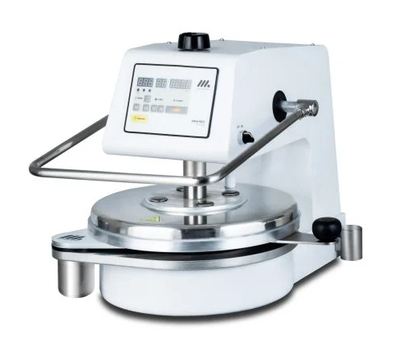
Selecting a commercial dough press is easier when the decision is based on the product rather than the machine first. Start with what you need to make, then narrow the equipment by platen, heat configuration, controls and electrical service.
1. Define the Product
Pizza, tortillas, pita and other flatbreads can have different dough characteristics, target sizes and production methods. A press suitable for one application may not be ideal for another.
2. Confirm Platen Size and Shape
The platen needs to accommodate the finished product. Round platens are common for pizza and tortilla work, while rectangular machines suit sheeted or rectangular products.
3. Decide Whether Heat Is Required
Compare non-heated, upper-heated and dual-heated designs. Heat should solve a process need; it should not be selected simply because it is available.
4. Compare Clamshell and Swing-Away Formats
Clamshell presses open on a hinge. Swing-away designs move the upper platen away from the loading area. Consider operator access, counter space and workflow.
5. Check Controls and Electrical Service
Confirm voltage, phase, frequency and total power before ordering. Programmable controls can be helpful where multiple recipes or repeatable settings are required.
6. Think About Throughput
Production output depends on more than a published cycle rate. Dough preparation, loading, unloading, operator pace and downstream production all matter.
See the commercial dough press comparison table to narrow the current Multi Press Pro models.
Match the Pressing Area to Real Product Dimensions
Do not size a press only from the nominal product name. A “large pizza” can mean different diameters from one operation to another, and rectangular flatbreads can require significantly more platen area than a round product. Confirm the maximum finished dimensions you actually need and leave practical working clearance.
Manual vs Programmable Operation
A simple manual control system can be appropriate for a limited menu and experienced operators. Programmable controls become more useful when multiple products need repeatable temperature or time settings, or when training consistency is important. More controls are not automatically better; they should solve a real operating need.
Evaluate Loading and Unloading
Press format affects more than appearance. Swing-away designs can provide open access to the lower platen. Clamshell machines can offer a compact and familiar motion. Consider counter depth, adjacent equipment, operator reach, where dough trays are positioned and where the pressed product needs to move next.
Confirm the Production Workflow
A quoted pieces-per-hour figure does not describe the whole line. Operators still need to portion, flour or prepare the dough if required, load the press, remove the formed piece and transfer it to the next process. The slowest step in that sequence may determine actual output.
Ask for the Exact Electrical Specification
Commercial presses may be offered in different voltages or frequencies. Always confirm the electrical specification on the quotation for the exact model. If the machine is being imported or installed in a facility with non-standard service, confirm compatibility before ordering.
Build a Short Application Brief
Before contacting a supplier, write down the product, dough weight, finished dimensions, thickness, desired hourly output, heat preference and electrical service. A short application brief helps prevent selecting a machine that looks suitable online but does not match the production requirement.
Frequently Asked Questions
What size dough press should I buy?
Choose a platen that comfortably accommodates the finished product dimensions and the dough-forming method.
What is the difference between clamshell and swing-away?
A clamshell pivots open while a swing-away moves the upper platen away from the loading area, changing operator access and footprint.
Should I choose digital controls?
Digital or programmable controls can help with repeatable settings, but the best control type depends on your process and staff workflow.
Need Help Choosing the Correct Press?
Tell us what product you are pressing, your target thickness or size, expected production volume and delivery location. We can help narrow the equipment selection.