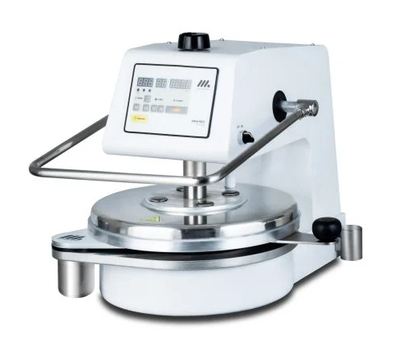
Commercial dough presses are available in heated and non-heated configurations. Heat is not simply a premium feature; it changes how the machine interacts with the dough and therefore needs to match the product and process.
What a Non-Heated Dough Press Does
A non-heated press relies primarily on mechanical pressure and platen adjustment. It can be a good fit when the dough formulation and process do not benefit from added platen heat, or when the operator wants a straightforward manual forming process.
What Heated Platens Can Change
Heated platens can help some doughs relax and form more readily. Depending on the machine, heat may be applied from the upper platen only or from both upper and lower platens. The correct choice depends on dough formulation, finished product and workflow.
Upper Heat vs Dual Heat
Upper heat applies temperature from one side. Dual heat applies controlled temperature from both sides. Dual heat may provide more even thermal influence, while upper heat may be sufficient for certain products and can reduce total electrical load compared with a dual-heated configuration.
Questions to Answer Before Buying
- What product are you making?
- What dough temperature and consistency do you run?
- What finished diameter or dimensions are required?
- What electrical service is available?
- Do you need manual controls or programmable operation?
Use the Dough Press comparison page to compare available heat configurations and specifications.
How Dough Formulation Affects the Decision
Flour type, hydration, fat content, dough temperature and resting time can all change how easily a dough portion spreads under pressure. Two bakeries producing products of the same diameter can therefore need different press settings or even different heat configurations. If possible, evaluate the press using the actual dough formula and portion weight that will be used in production.
Think About the Finished Product, Not Just the Pressing Step
A press is one step in a larger process. The dough may be topped immediately, proofed, baked, par-baked or transferred to another line. The press should support that downstream process without creating unnecessary sticking, excessive handling or a shape that is difficult to transfer.
Electrical Service Is Part of the Equipment Decision
A non-heated press avoids heater load, while heated models require electrical capacity for the platen heaters and controls. Before choosing a heated machine, confirm the exact voltage, phase, frequency and power requirement for the model being quoted. Do not assume a machine can be connected to an available outlet because the plug appears similar.
When a Non-Heated Press Makes Sense
A non-heated press can be attractive when the dough already forms easily, when the process must avoid added heat, when electrical service is limited or when a simpler manual workflow is preferred. It can also be a useful benchmark when comparing machines because it isolates the mechanical pressing function from the effect of platen temperature.
When Heated Pressing May Help
Heated pressing may be worth considering when controlled platen temperature improves dough relaxation, forming consistency or release for the intended recipe. The correct temperature and dwell time are process variables, not universal settings. Commercial operators should confirm them using their own product.
Our Recommendation
Start with the product, then choose the heat configuration. If you are unsure, provide the dough type, portion weight, target diameter, target thickness, current production method and available electrical service when requesting a quote. That gives the equipment selection process a much stronger technical basis than choosing a machine only by price or wattage.
Frequently Asked Questions
Is a heated dough press always better?
No. The best configuration depends on the dough, product and process. Some applications work well with non-heated pressing.
What is dual heat?
Dual heat means the press applies controlled platen heat from both the upper and lower pressing surfaces.
Do heated presses require more electrical capacity?
Heated equipment adds electrical load. Always confirm voltage, phase, frequency and available circuit capacity for the specific model.
Need Help Choosing the Correct Press?
Tell us what product you are pressing, your target thickness or size, expected production volume and delivery location. We can help narrow the equipment selection.