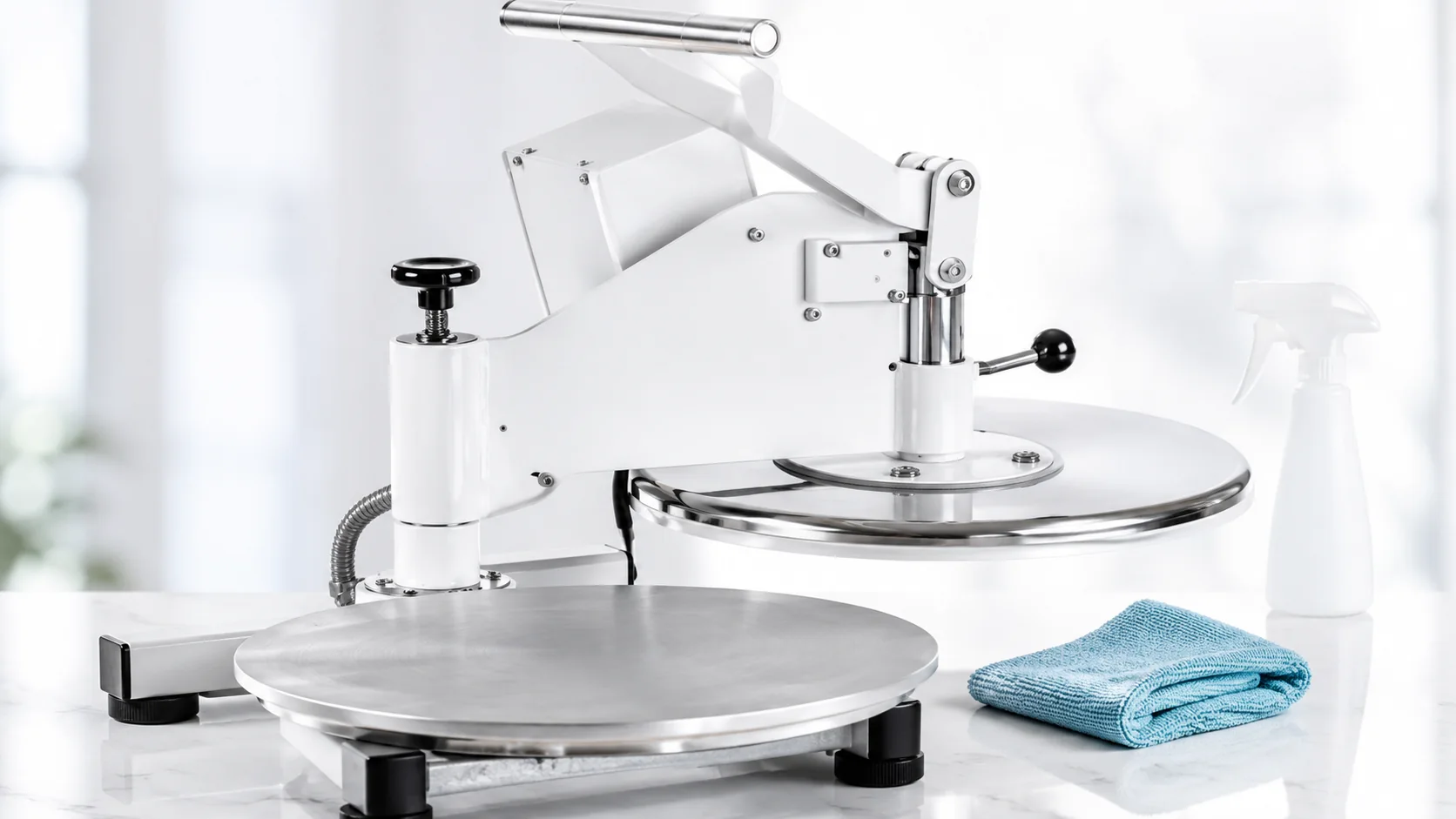
Commercial pressing equipment works directly with food, so routine cleaning is part of both food safety and machine care. Always follow the cleaning instructions supplied for the specific model and any procedures required by your food-safety program.
Clean Food-Contact Surfaces After Production
Remove product residue from platens, trays and other food-contact surfaces using methods and cleaning agents compatible with the machine materials.
Keep Water Away From Electrical Components
Heated and electrically controlled dough presses contain switches, heaters, wiring and control components. Do not hose down or immerse equipment unless the manufacturer explicitly identifies the machine as suitable for that cleaning method.
Inspect Moving Parts
Handles, pivots, adjustment mechanisms, fasteners and sliding components should be inspected regularly for abnormal movement, wear or looseness. Address developing mechanical issues before they affect operation.
Avoid Abrasives That Damage Food-Contact Surfaces
Harsh abrasives can scratch stainless steel or food-contact polymer surfaces. Use tools and chemicals appropriate for the material and your sanitation program.
Build Cleaning Into the Buying Decision
Before purchasing a press, consider how operators will access the platen, tray and surrounding areas. A machine that fits the production requirement but is difficult to clean may create unnecessary daily work.
Start With the Manufacturer's Instructions
This guide is intentionally general because cleaning requirements vary by machine. The model manual, food-contact material information and electrical construction should take priority over generic advice. If the cleaning method is unclear, ask the supplier before using aggressive chemicals, high-pressure water or abrasive tools.
Separate Dry Cleaning From Wet Cleaning Tasks
Loose flour, dough particles and dry debris can often be removed before applying moisture. This can reduce the amount of residue that turns into paste around hinges, seams and adjustment areas. Meat applications usually require a different sanitation sequence because protein and fat residues must be removed from food-contact surfaces.
Pay Attention to Edges, Adjustment Points and Undersides
Flat platen faces are easy to see, but residue can collect around edges, removable trays, adjustment components and the underside of pressing surfaces. Include these areas in routine inspection rather than cleaning only the obvious top surface.
Allow Equipment to Cool Before Cleaning Heated Surfaces
Heated dough presses should be shut down and allowed to reach a safe cleaning temperature in accordance with the machine instructions. Cleaning hot surfaces can create burn risk and may also cause cleaning chemicals or water to behave unpredictably.
Document Routine Inspection
Commercial operations benefit from a simple checklist covering cleanliness, loose fasteners, unusual play in handles or pivots, damaged cords, cracked food-contact components and abnormal noises. Recording small issues early can make maintenance planning easier and help prevent unexpected downtime.
Cleaning Is Also an Equipment-Selection Question
When comparing presses, ask how easily operators can reach the food-contact area, whether there are removable components and what cleaning restrictions apply. A slightly different machine layout can save meaningful labour when sanitation is performed every day.
Frequently Asked Questions
Can I hose down a dough press?
Do not hose down electrical equipment unless the manufacturer specifically approves that cleaning method.
How often should a food press be cleaned?
Cleaning frequency should follow the machine instructions, your food-safety program and the products being processed.
What should operators inspect regularly?
Food-contact surfaces, adjustment mechanisms, handles, pivots, fasteners and other moving parts should be checked for cleanliness and abnormal wear.
Need Help Choosing the Correct Press?
Tell us what product you are pressing, your target thickness or size, expected production volume and delivery location. We can help narrow the equipment selection.